

I remember a story I heard growing up.
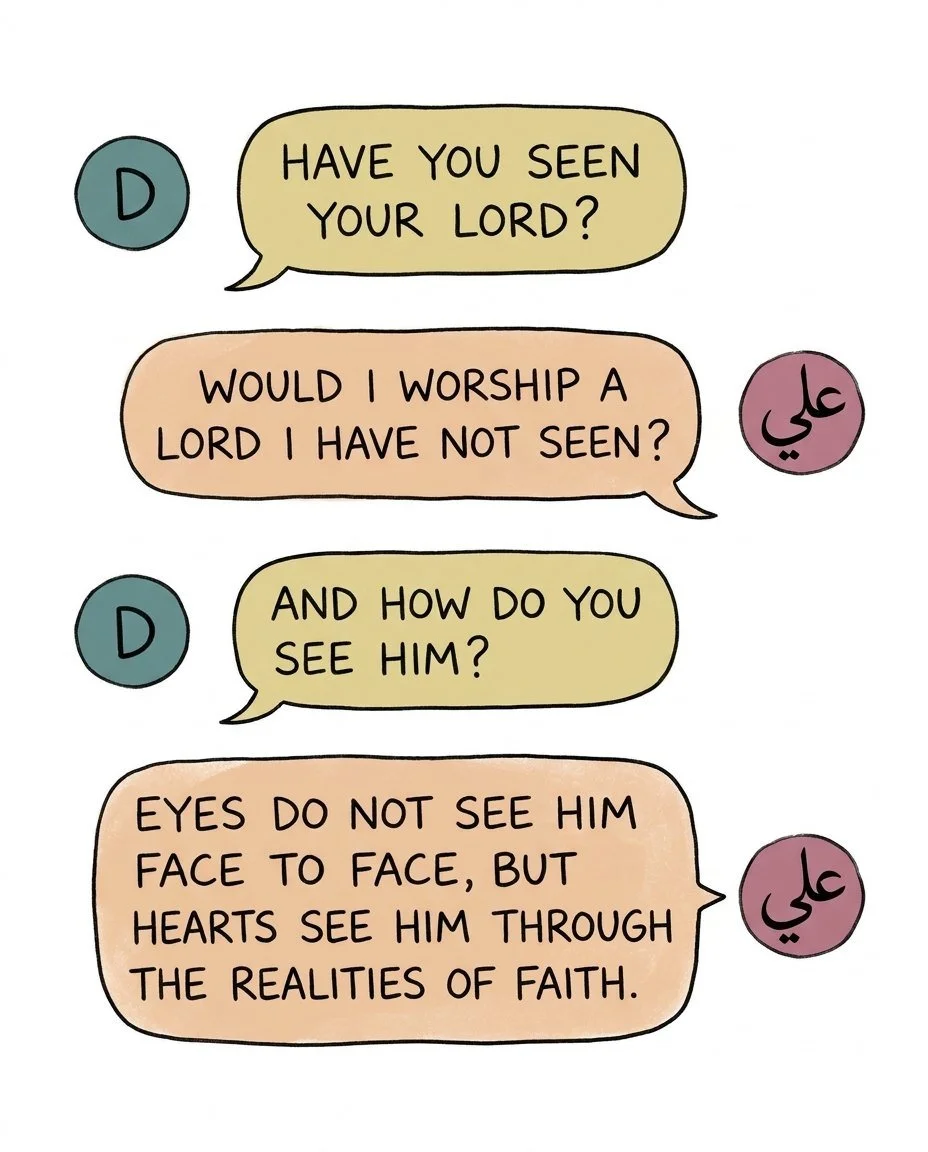
A man named Dhi'lib once asked Imam Ali, "Have you seen your Lord?"
Imam Ali replied, "Would I worship a Lord I have not seen?"
So Dhi'lib asked him how he sees God, and Imam Ali said, "Eyes do not see Him face to face, but hearts see Him through the realities of faith."
It's a profound answer. But whenever I thought about it, I was left wondering what it actually means to see God with the heart. I could feel that it was true without being able to say how it worked.
I found deeper insights when I read William Chittick's book Science of the Cosmos, Science of the Soul, where he explains how Ibn Arabi understood this kind of seeing.
What can the eye actually see?
Think about what an eye does. We say "seeing is believing," and there's something right about that. When you see a thing with your own eyes, it gives you clarity and it takes you closer to the truth.
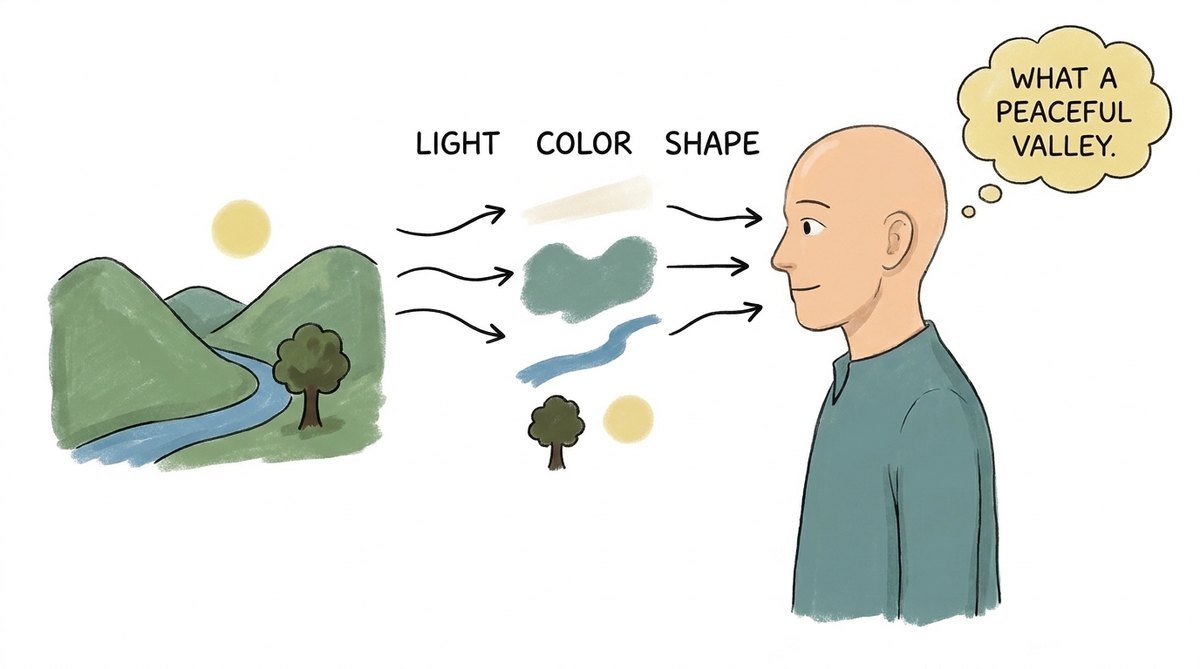
But when you look at what the physical eye can actually take in, it's very limited. It can see light, color and shape. And that's really all it can see.
You might say, "But I'm looking at a whole valley: hills, a river, a tree by the water." That's true, but notice what actually happened. The eye only took in light, color and shape: a patch of green, a strip of blue, a dark shape against a bright sky.
Something inside you put those patches together and said, "That's a valley, and that's a river." And something inside you felt how peaceful it was. The eye brought the picture in. The understanding and the feeling happened somewhere else.
So the eye is a wonderful instrument, but on its own it brings in very little. And God has no light, color or shape at all, so there's nothing there for the eye to take in. The real seeing happens inside. And this is where Ibn Arabi says something that changed how I read Imam Ali's answer: the heart has eyes too, and it has two of them.
The heart has two eyes
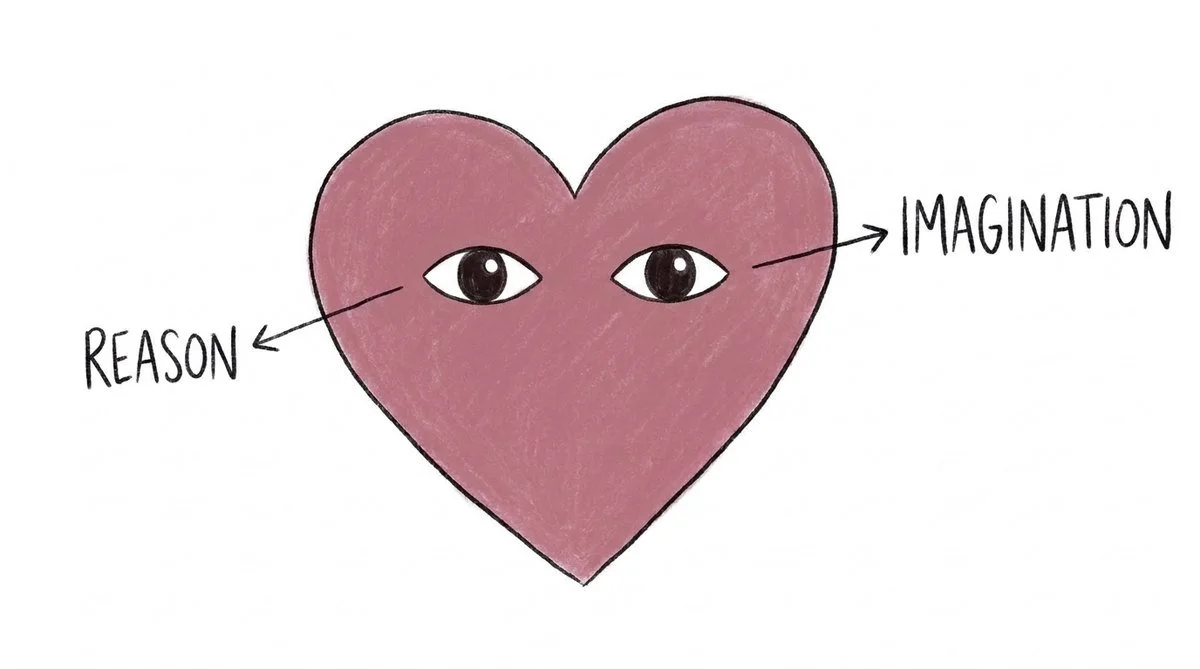
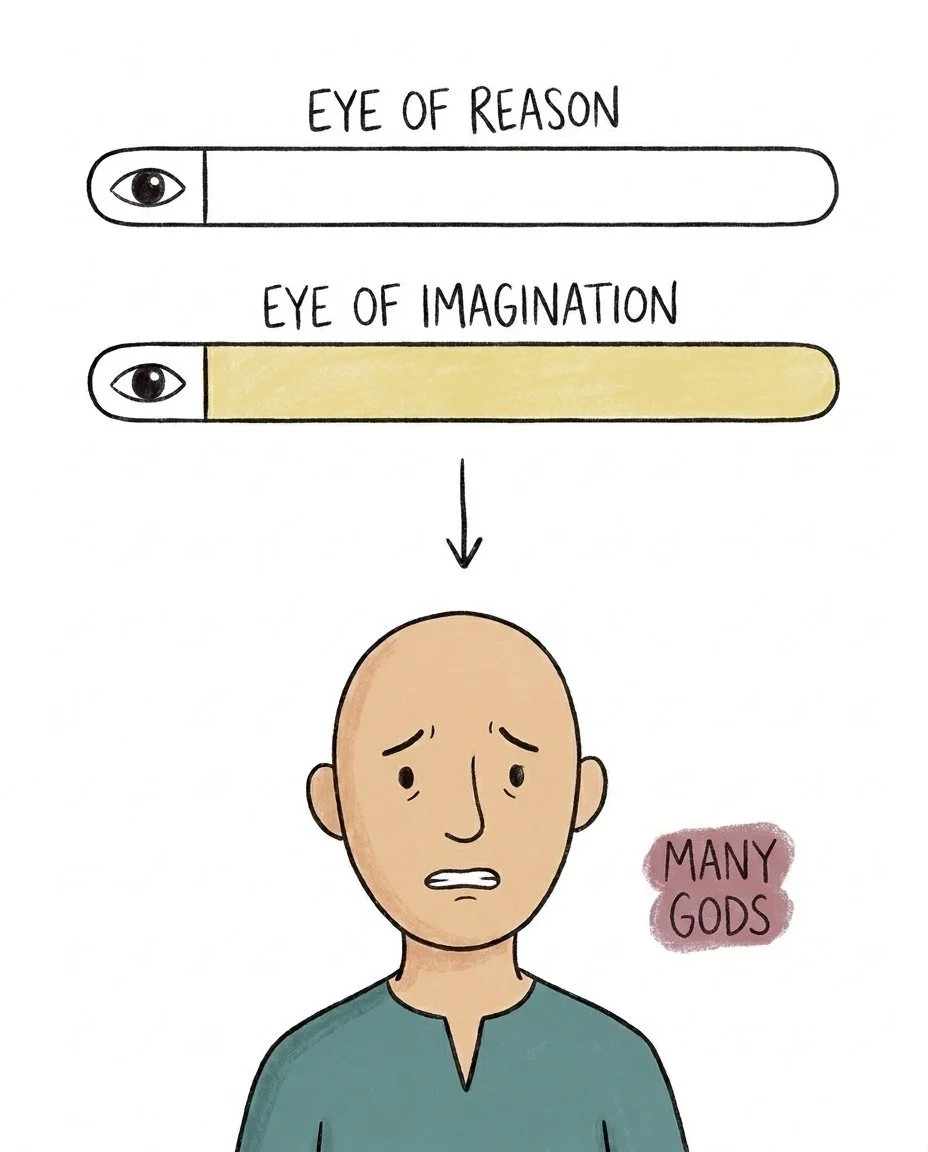
According to Ibn Arabi, one eye of the heart is the eye of reason, and the other is the eye of imagination.
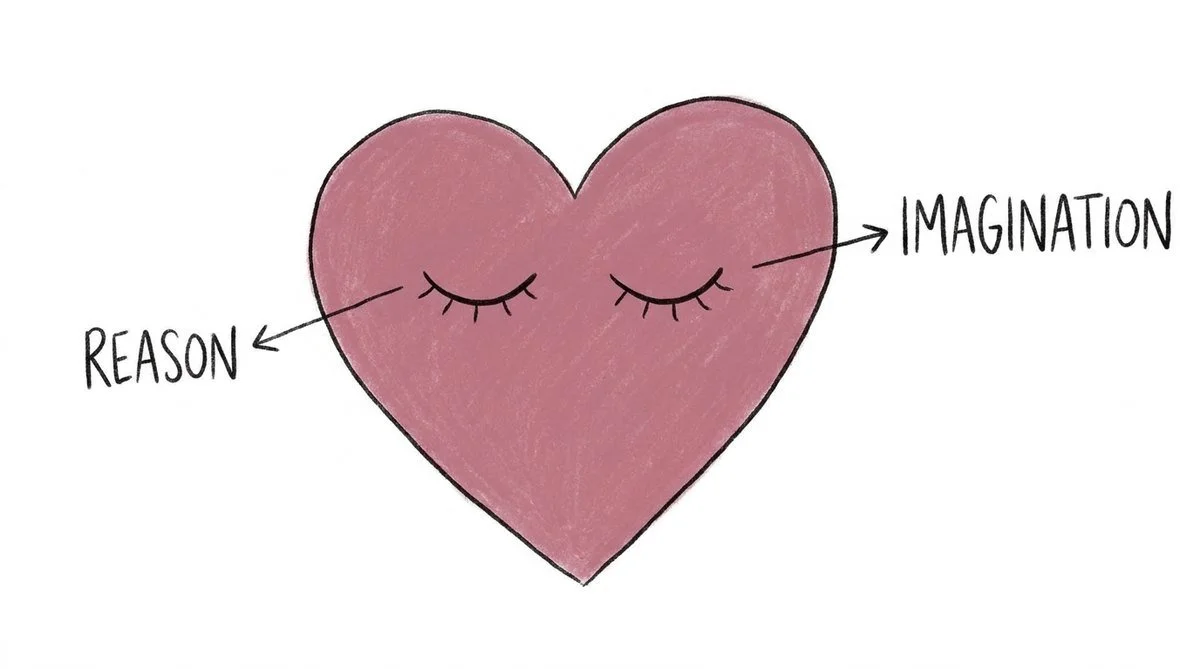
The word imagination can mislead us here. In Ibn Arabi's sense, imagination isn't fantasy or make-believe. It is the power that sees God as near, in the signs and symbols of things.
Reason, on the other hand, is the power that sees Him as beyond everything we can picture.
And he says we need both eyes to see God.
Why both? Because God is both far and near. This exchange is recorded in Nahj al-Balagha, Sermon 179. A few lines later in that sermon, Imam Ali describes God like this:
"He is near to things but not (physically) contiguous. He is far from them but not (physically) separate."
In other words, God is close to everything without touching it, and far from everything without being cut off from it.
The Quran speaks of Him in both ways too. In one verse He is near:
"Wherever you turn, there is the face of God" (2:115).
In another He is beyond comparison:
"There is nothing like Him" (42:11).
The eye of reason sees God as far, and the eye of imagination sees Him as near. To see Him truly, in both His distance and His nearness, you need both eyes open.
The eye of reason sees God as distant
The eye of reason knows that God can't be grasped. So it strips away every quality and every likeness we try to attach to Him, and whatever we picture, it tells us that God is beyond that.
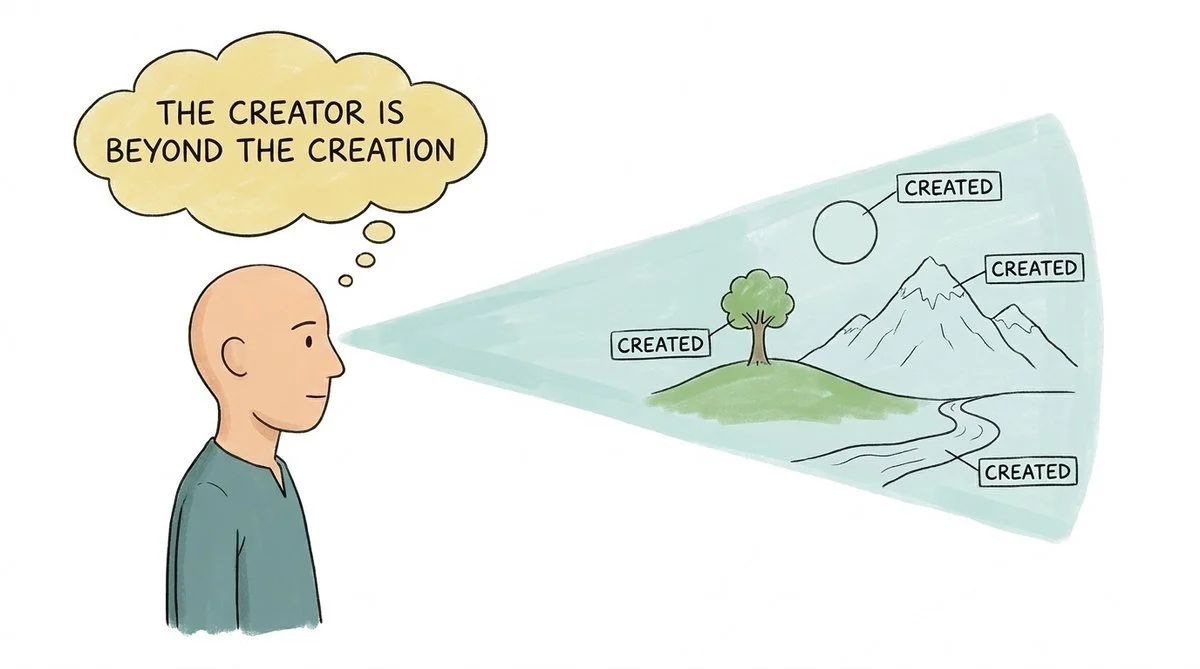
That is true, and it matters. It guards us against making gods out of created things.
But left alone, reason keeps stripping. It starts to strip away even the qualities God gives Himself in revelation: that He is merciful, that He hears, that He loves. God becomes so remote that He seems unnecessary, because a God with no qualities is a God you can't pray to, love or need.
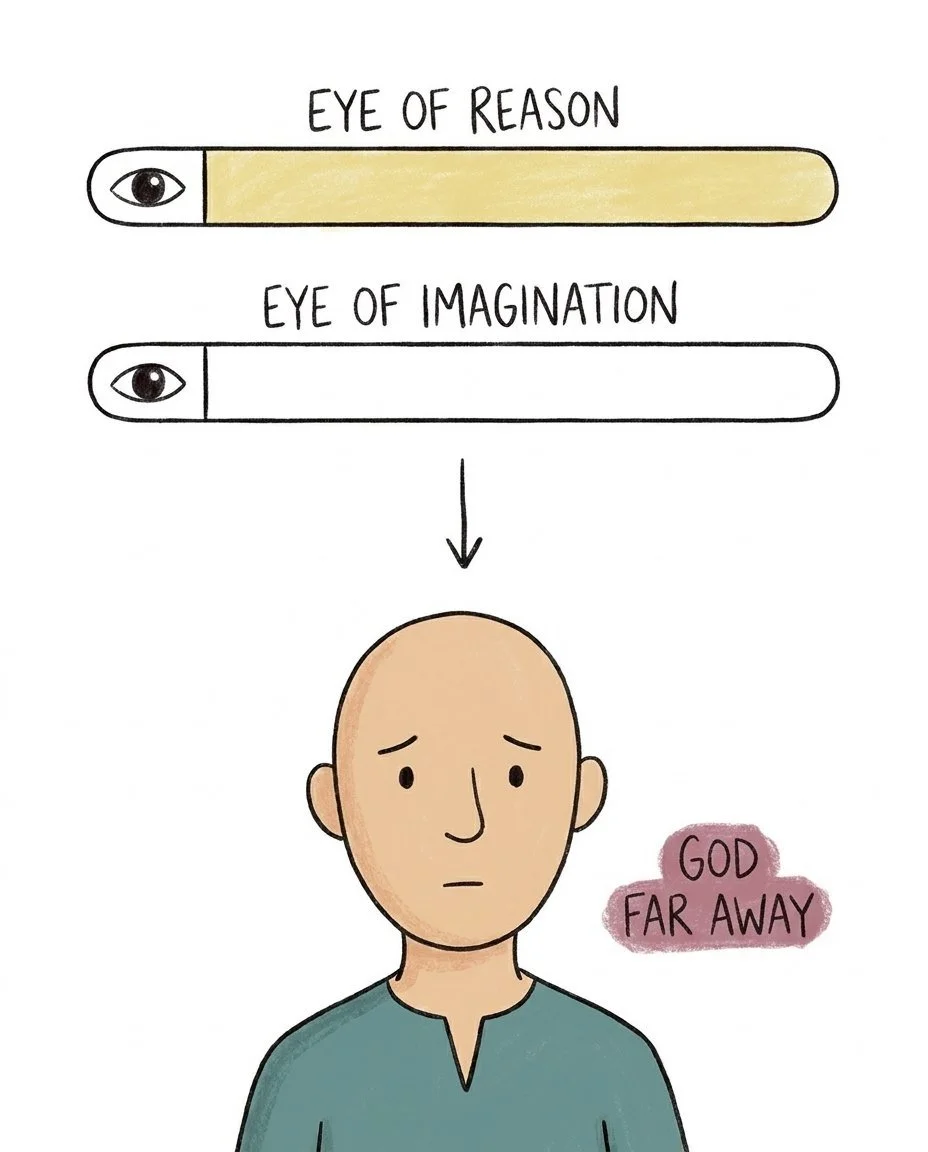
As Chittick puts it, "Excessive dependence on reason leads to agnosticism and atheism."
The eye of imagination sees God as near
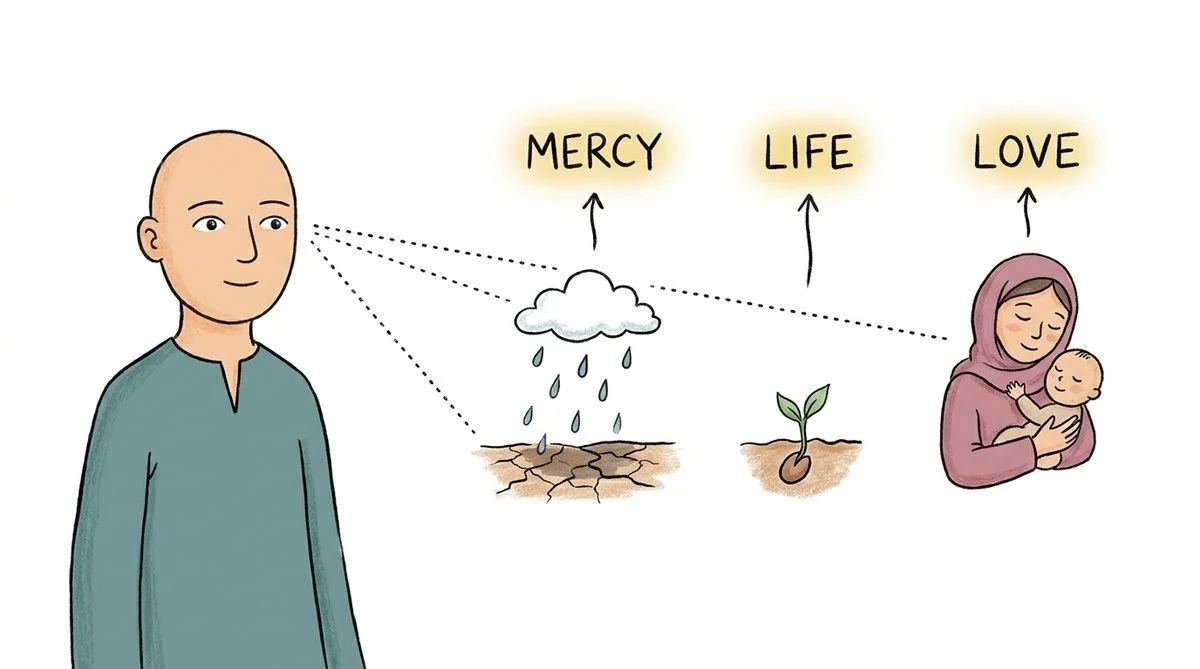
The eye of imagination finds God's signs everywhere. His names, like the Merciful and the Loving, show up in the world and in the soul, and the whole universe becomes a theatre of meaning. This eye sees things as signs pointing to God, and even as His very presence.
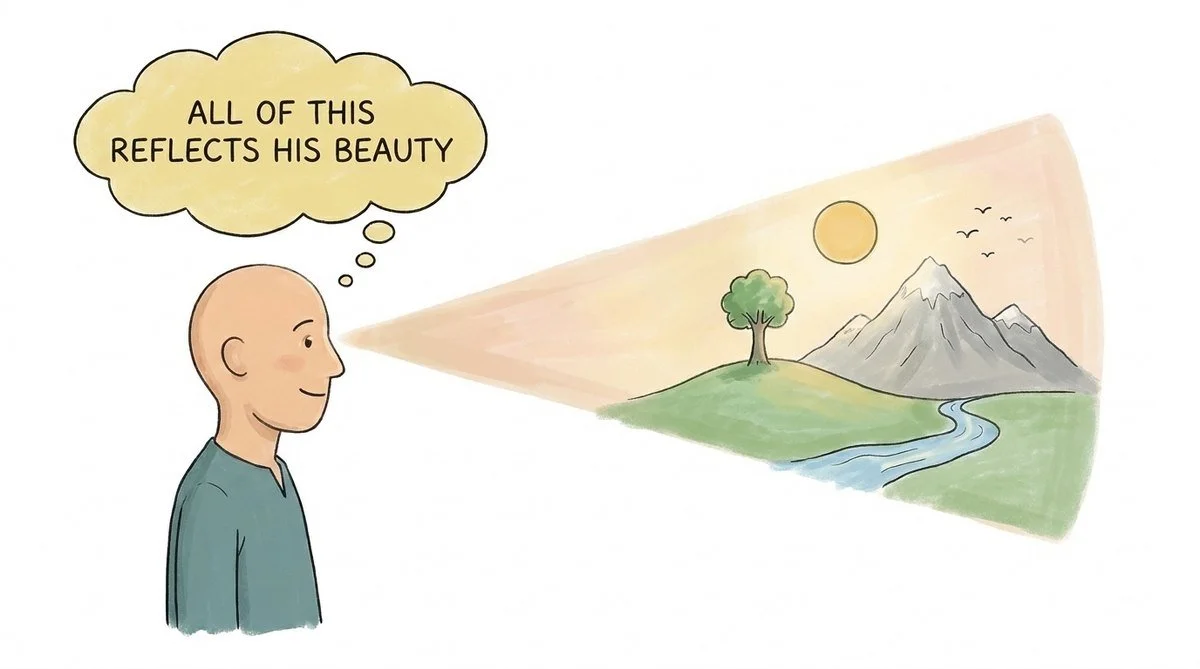
But left alone, imagination goes the other way. In Chittick's words, "Left to its own devices, however, it will divinize the world and its productions and fall into takthir, the assertion of many gods." In other words, it ends with many gods.
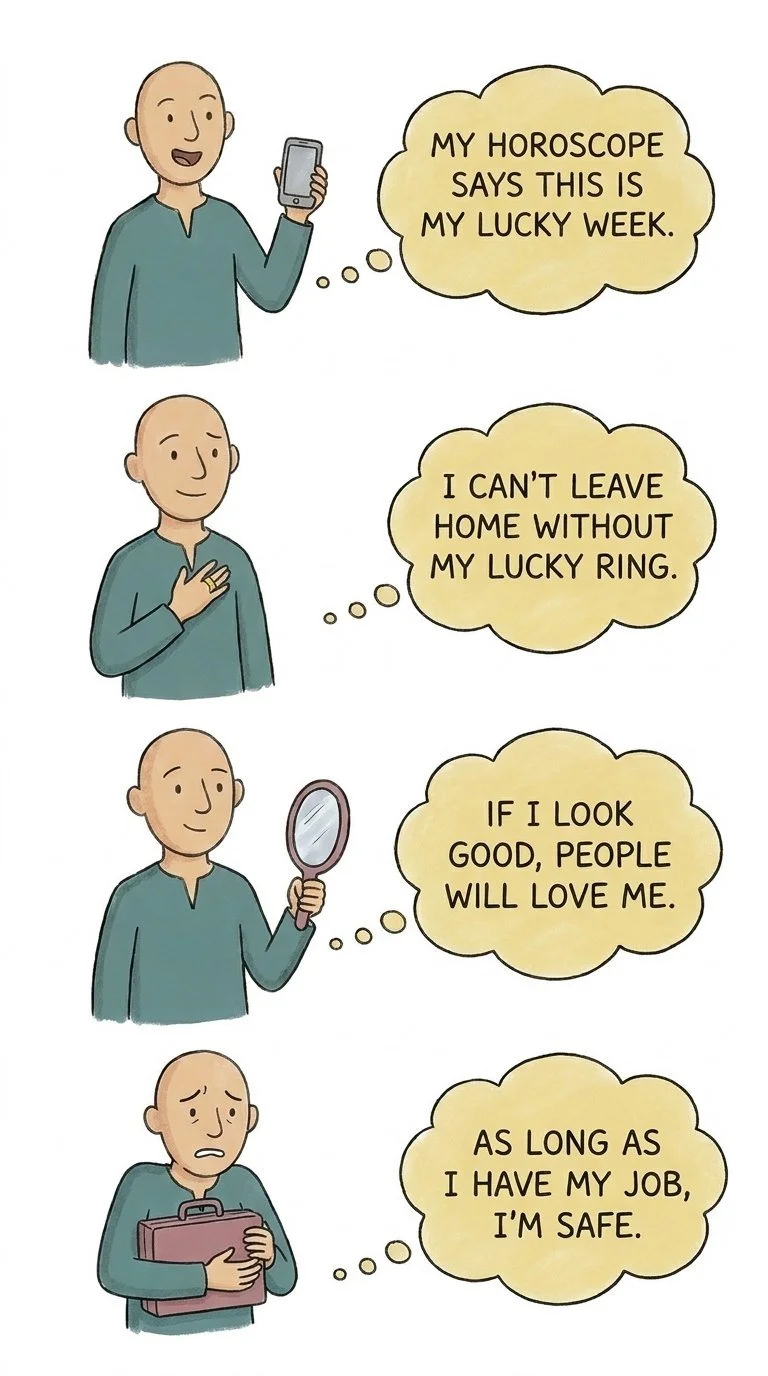
Seeing God's mercy in the rain is one thing; treating the rain as a power in itself is another. Most of us would never call these things gods. But quietly, we forget that mercy, provision and safety come from Him, and we start relying on the people and things they come through.
Why do we need both eyes open?
Take the sun.
One eye knows that the sun is far beyond the sky, and too bright to look at directly. The other eye sees its light all around you, warming your face.
Keep only the first, and the sun becomes a distant fact. Keep only the second, and you mistake the warmth on your skin for the sun.
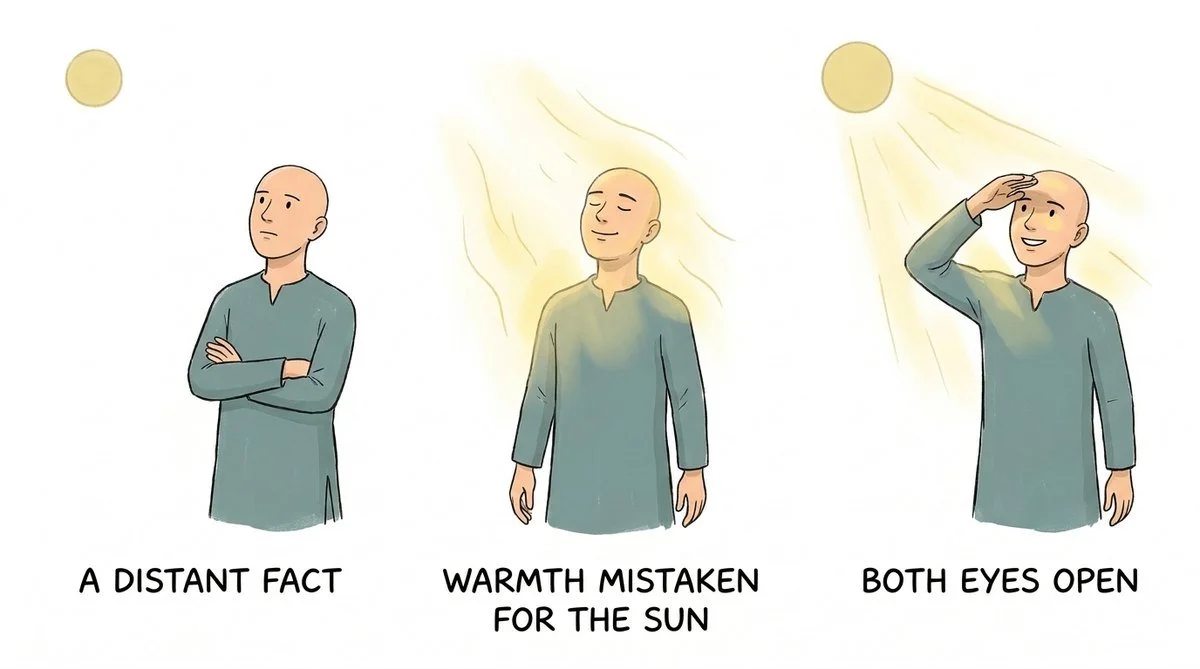
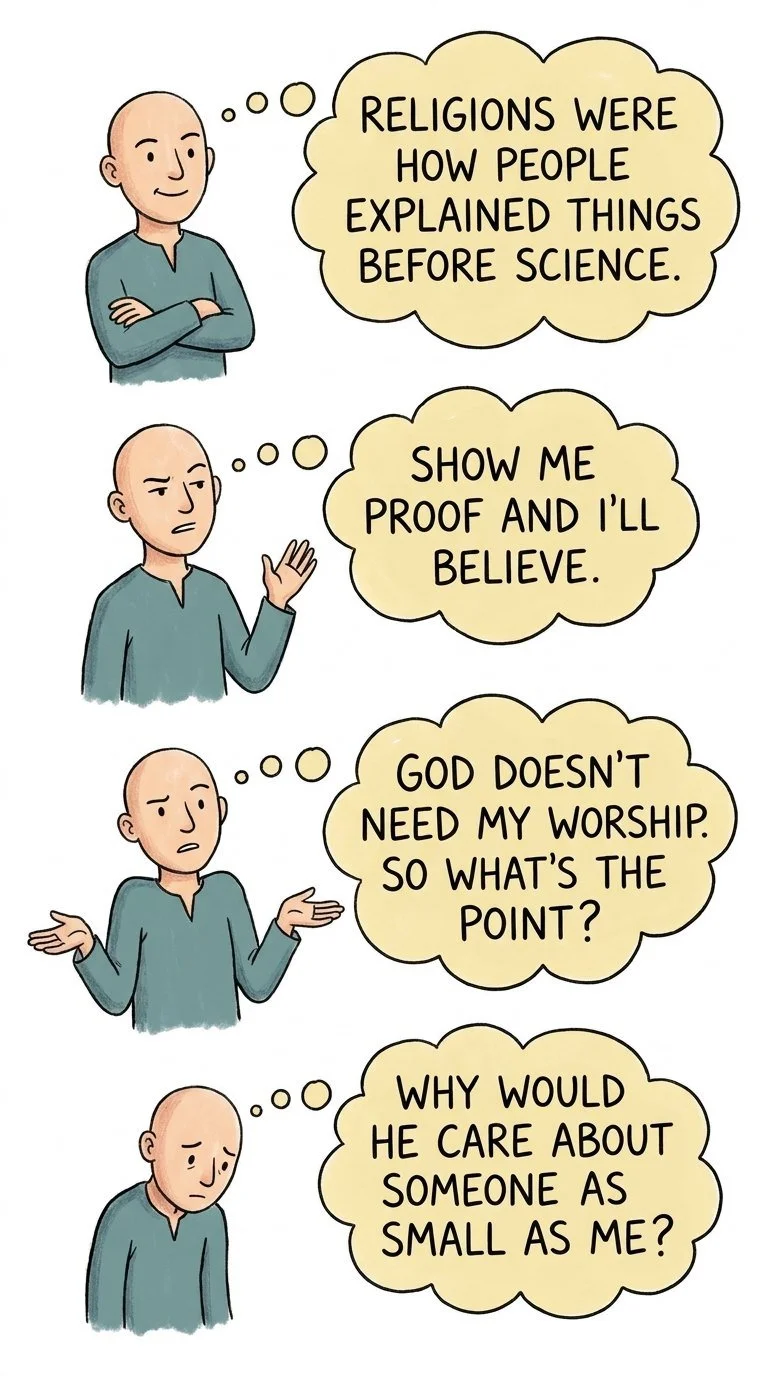
Similarly, with only the eye of reason, God becomes a distant idea that we can manage without, and with only the eye of imagination, we mistake His signs for Him. To see God with the heart, both eyes need to be open.
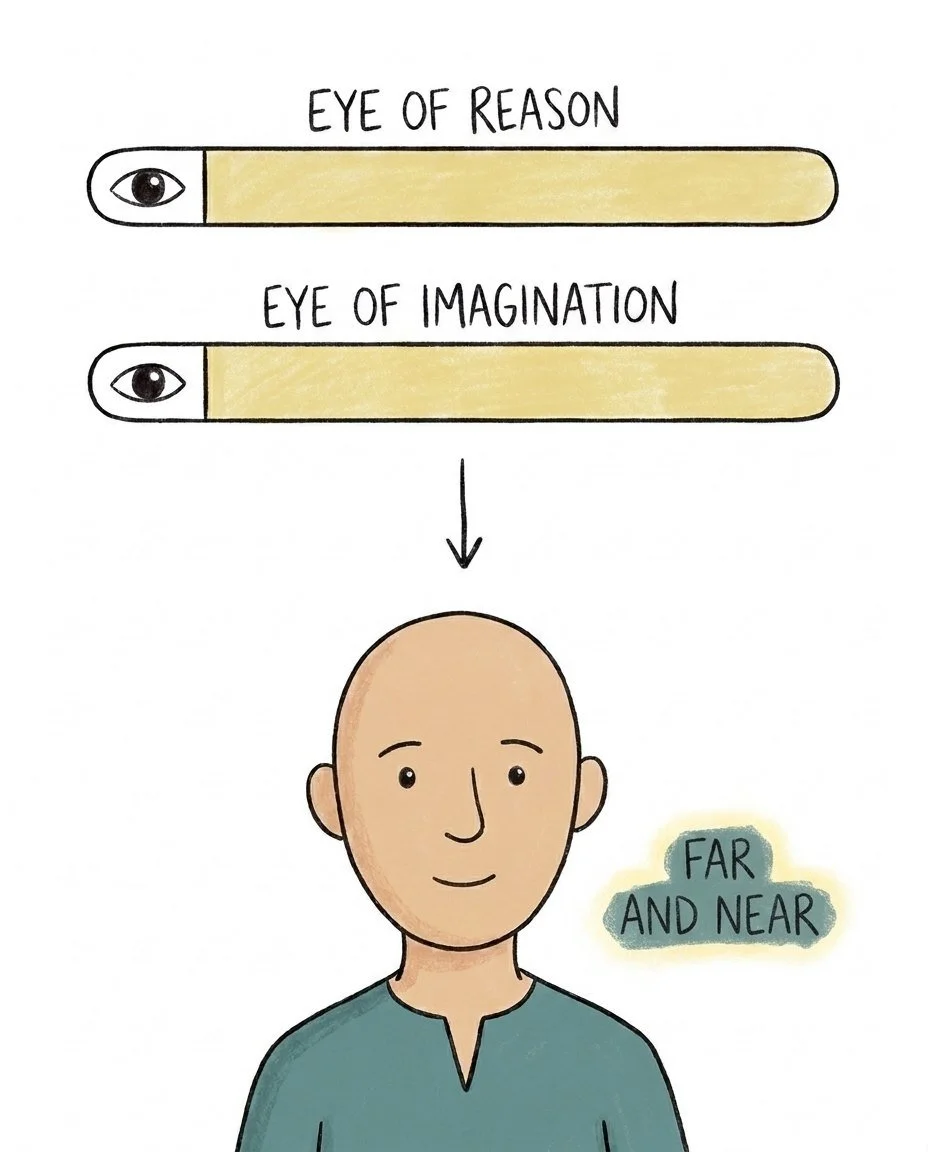
Reason keeps the heart from treating anything created as if it were God, and imagination lets it see every creature as a sign.
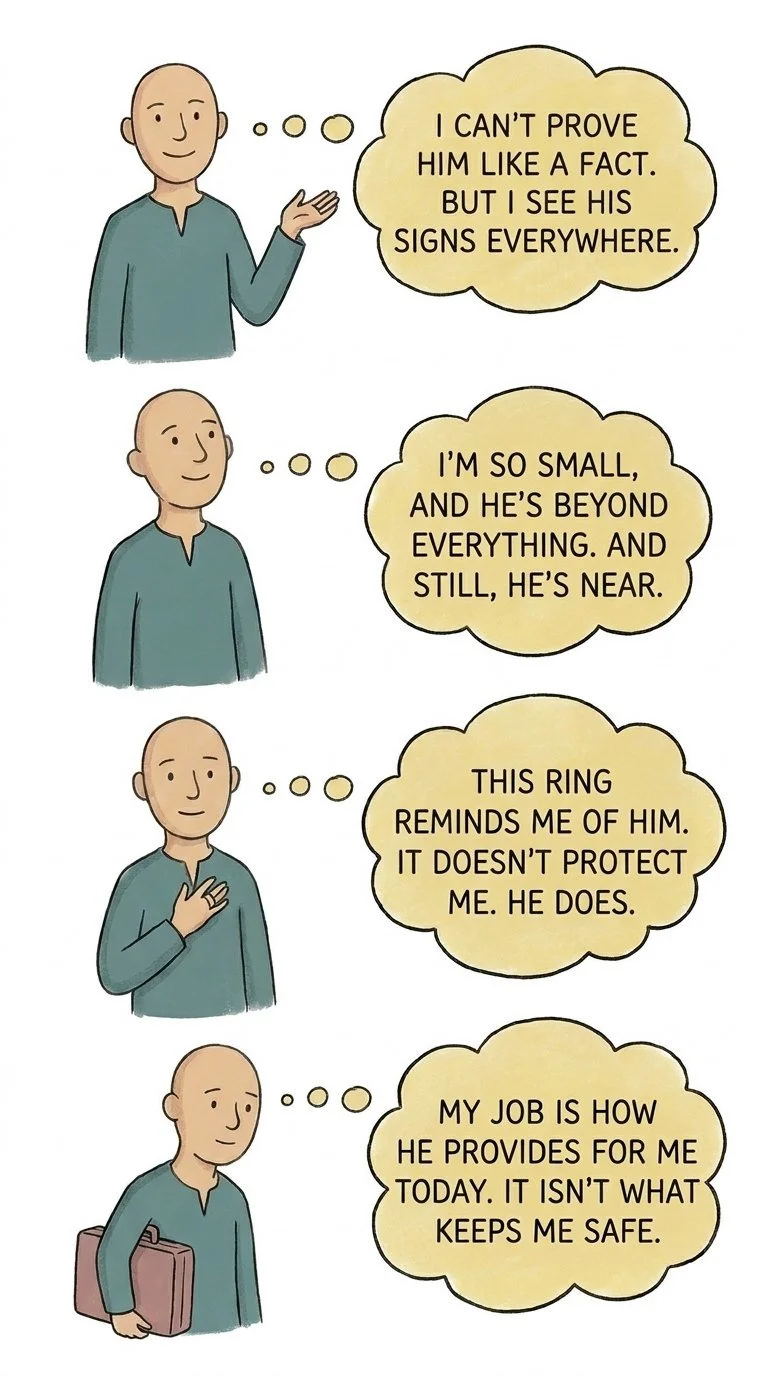
How do you open both eyes?
The Quran describes people who remember God standing, sitting and lying down, and who reflect on the creation of the heavens and the earth (3:191).
Remembrance is Dhikr
Reflection is Fikr
And I find it helps to think of them as one practice for each eye.
Fikr, thinking deeply about the world, trains the eye of reason to see that God is beyond all of it.
Dhikr, remembering God by His names, trains the eye of imagination to find those names everywhere: the Merciful in the rain, the Loving in a mother's arms.
Then, as Imam Ali says, the heart can see Him through the realities of faith.
