

We live in a world of information abundance, and often information overwhelm. Most of us spend hours online, and the moment we open a phone or a laptop, it all arrives at once: social media, emails, work messages, WhatsApp groups, each one competing for our attention.
It's a lot of information, and with it comes a lot of confusion.
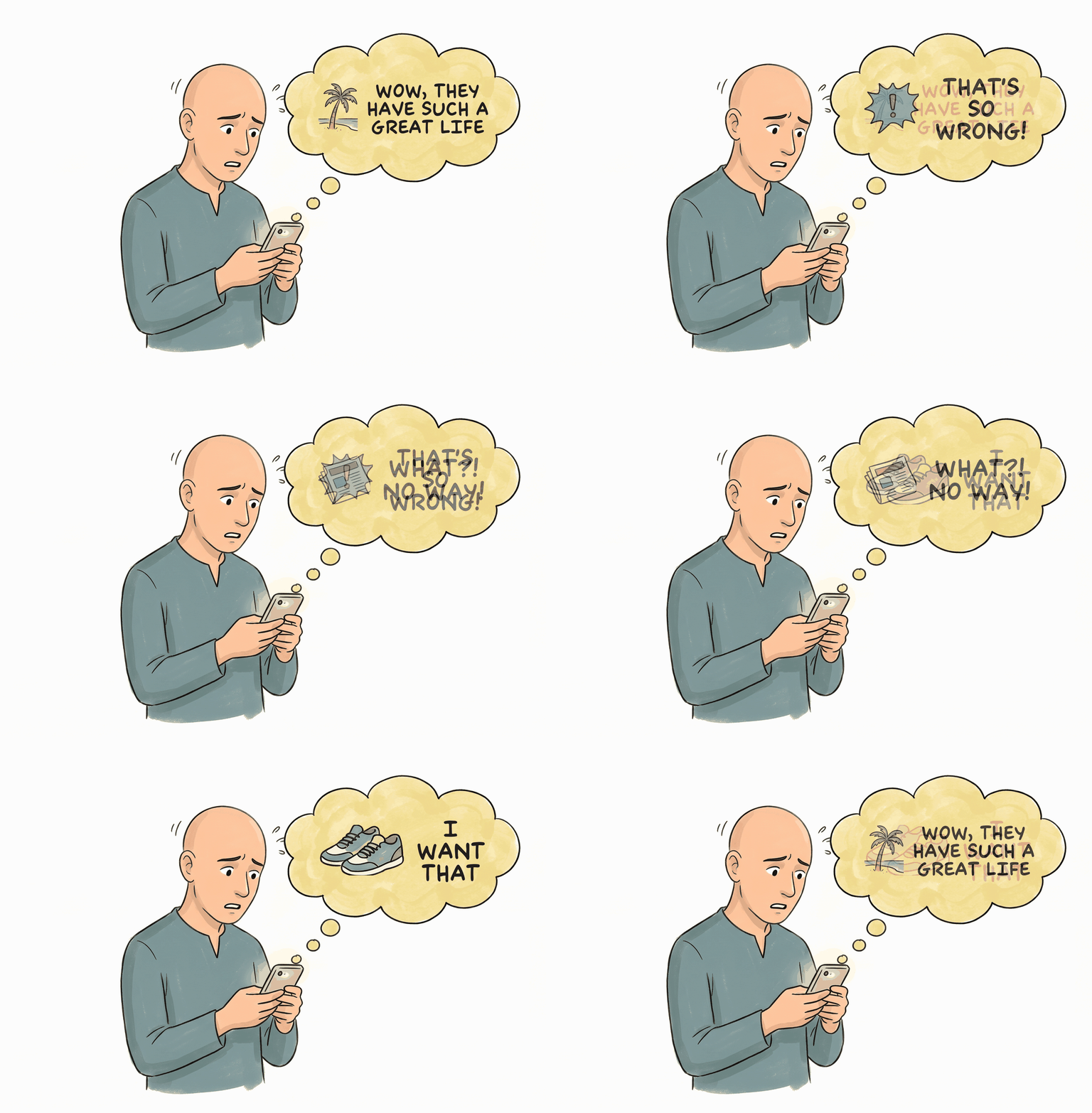
When I open social media, I can feel a pull.
It takes my attention and drags it in different directions, and it almost nudges me to think a certain way.
Someone's holiday photos make my life feel boring. A stranger's strong opinion makes me angry before I've finished reading it. A headline shocks me, and an advert makes me want something I didn't know existed five minutes ago.
Each post seems built to get a reaction out of me.
Given that this is the world we live in, how can we think more clearly, without getting sucked in? And underneath all these voices, how do we know what is true?
This is a big question, and I don't have all the answers. But I'd like to share a few ideas and practices that have helped me think more clearly.
What makes two people see the same thing differently?
Thinking happens so fast that it feels automatic. And most of us assume that what happens outside decides how we think and feel. See something beautiful, and good thoughts and good feelings follow. See something painful, and the negative ones follow.
But if we slow down and watch how a thought actually forms, there's a step in the middle we usually miss:
something happens
we look at it through a frame
the frame shapes our thoughts and feelings
By a frame, I mean our worldview, the layer of interpretation we look at everything through. You've probably seen this yourself: the same event, two very different reactions. The event was neutral. The frame was different.
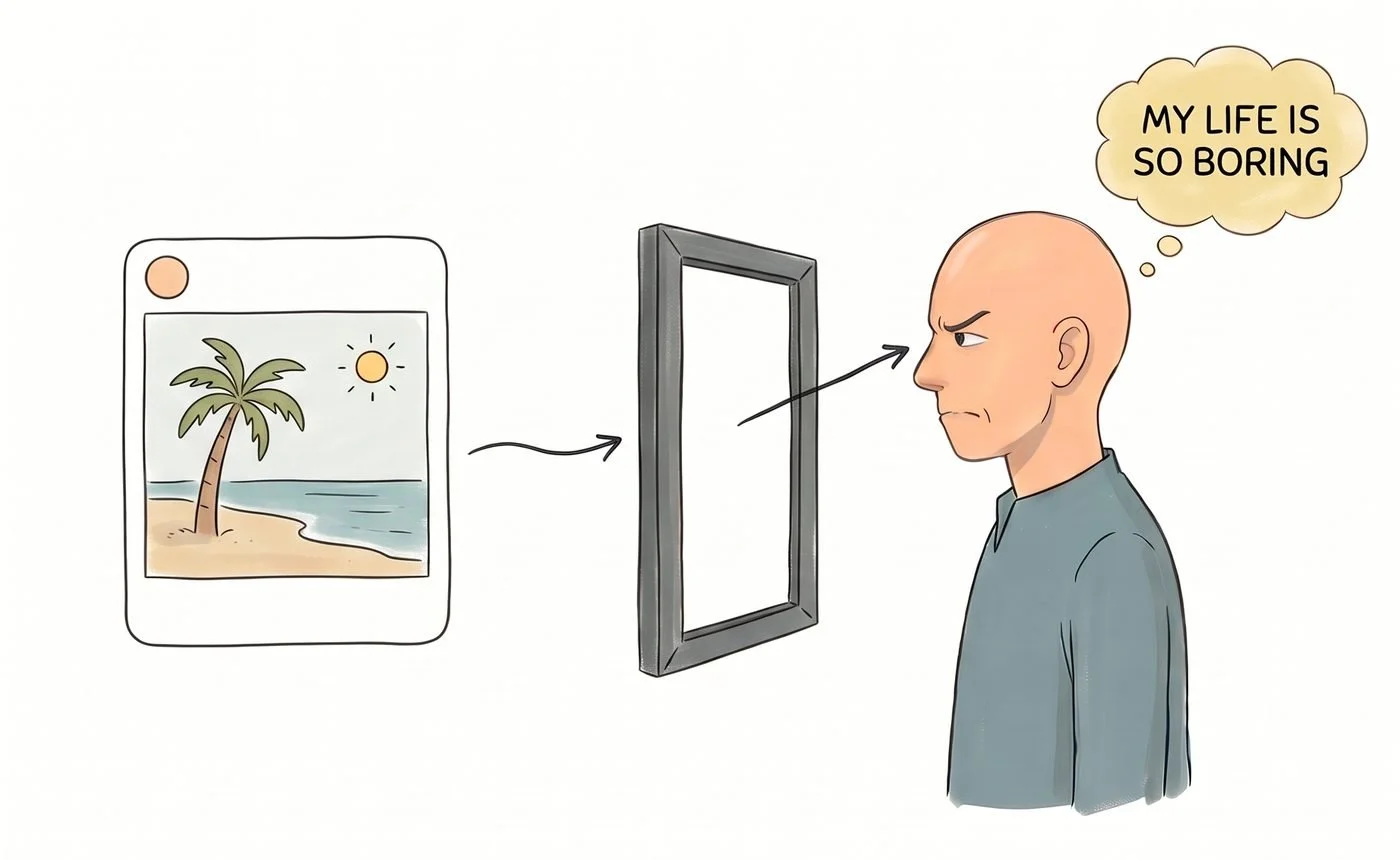
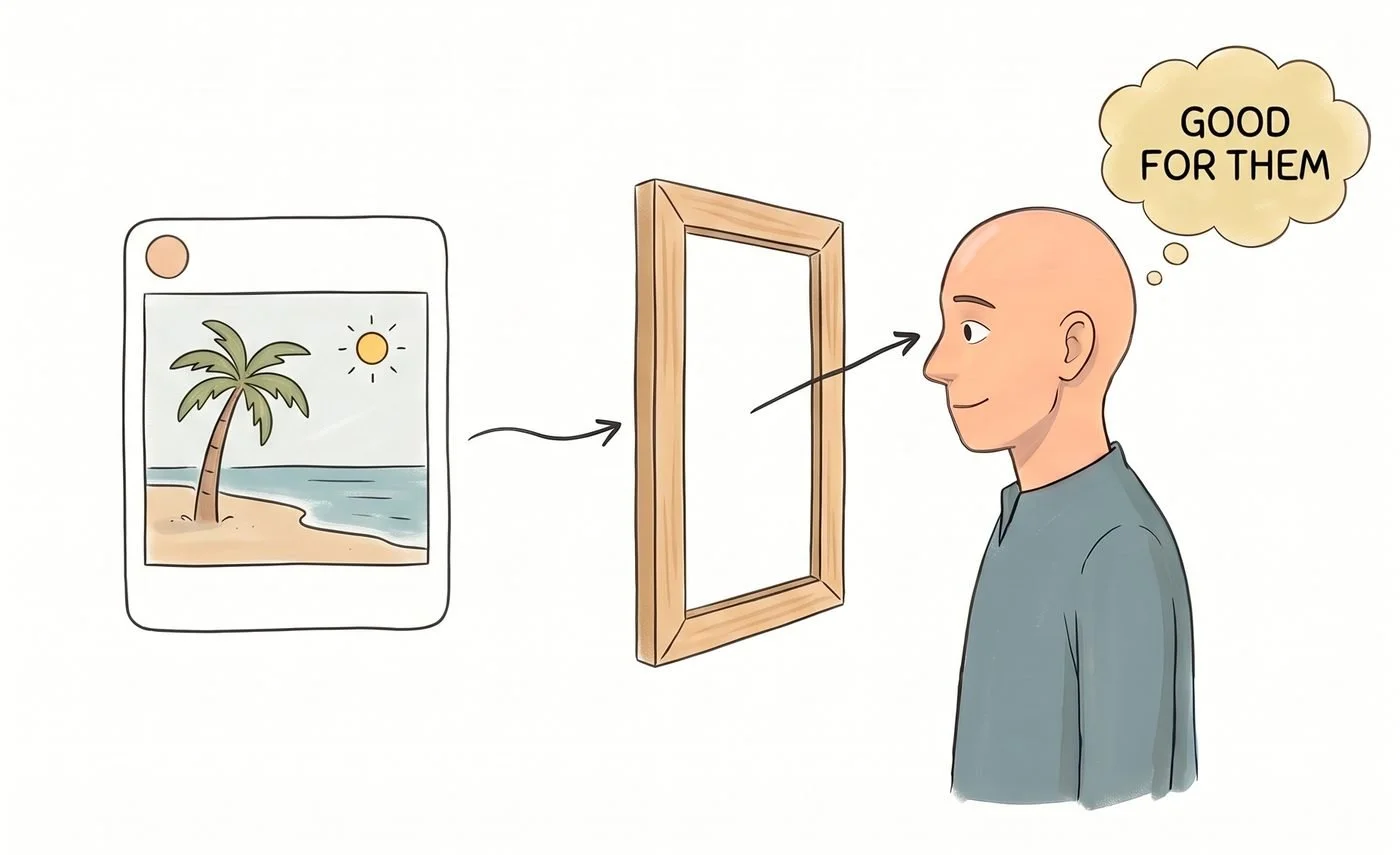
This matters, because once we can see the frame, we can start to think about it, instead of only through it.
Can we change our frame?
Once we can see the frame, the next question is obvious: can we change it? We can't change our frame directly. But we can update it, by choosing where we put our attention. This is where we have a choice.
Right now, your attention is on this blog post. You could shift it to watching a video, to your work, to a conversation with someone, to simply resting, or to some other thought on your mind. That choice is yours.
Over time, it shapes our worldview, and with it our whole experience of life. So the sequence runs like this:
where we put our attention
shapes our frame
and our frame shapes our thoughts
Rumi describes where this ends up:
"If your thought is a rose, you are a rose-garden; and if it is a thorn, you are firewood for the furnace." (Masnavi II:278, adapted from Nicholson's translation)
Think of attention as what we plant.
Where we keep it, day after day, is what grows into the garden: plant grievance and the garden fills with thorns, plant beauty and it fills with roses. And whatever the garden holds is what our thoughts grow from.
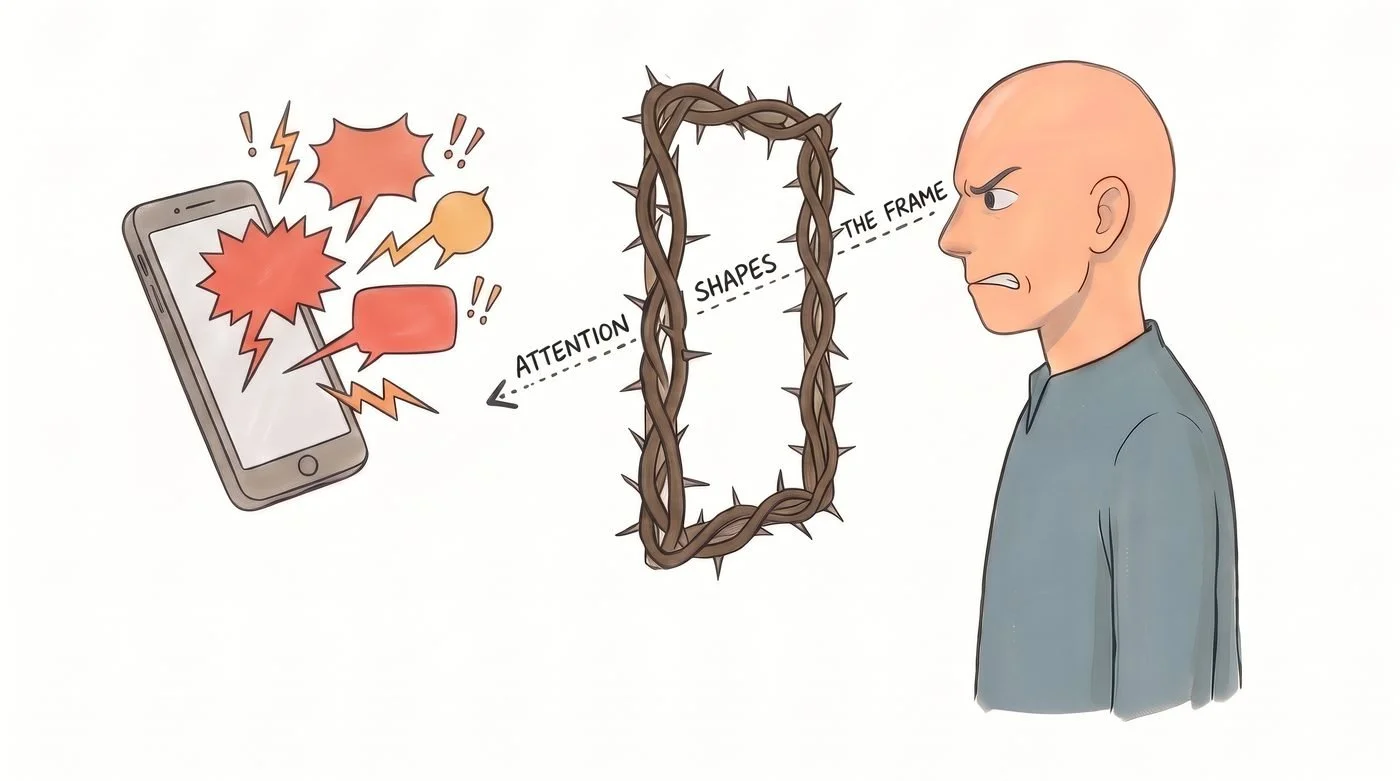
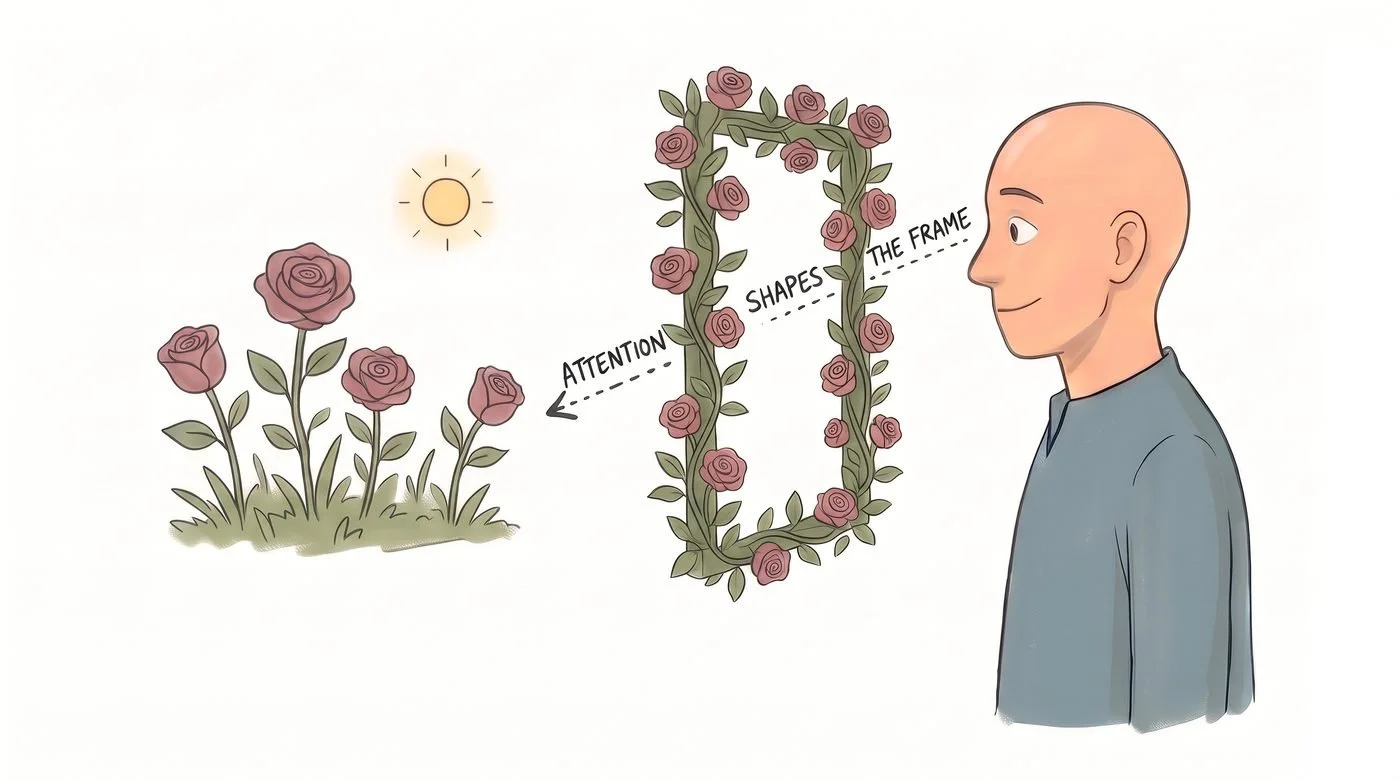
So if the choice of where our attention goes is ours, the real question becomes: where should we put it?
So where should we point our attention?
The mystics, and those who have walked the spiritual path before us, have given the same answer for centuries: turn your attention to God, and keep it there. The Quran describes people of understanding as those who:
"remember Allah, standing, sitting, and reclining, and consider the creation of the heavens and the earth" (Quran 3:191, Pickthall)
But hearing this can be confusing. What does it actually mean to put our attention on God, and how do we do it? Does it mean we stop paying attention to the world and think only about God? And why God, of all things?
Let's start with why, and then come to what it looks like in practice.
Why God? Because God is the most real.
Everything else we can point our attention at, the feed, the news, our worries, is passing, and gets whatever reality it has from Him. When our attention rests on what is most real, it shapes a frame that sees the world as it is.
When we forget God, we lose that anchor and jump from one thing to the next, which is exactly how the feed feels.
Does that mean turning away from the world?
What does it actually mean to keep your attention on God? Does it mean you stop paying attention to the world, cut yourself off from it, and think only about God?
Not exactly.
Imagine you receive a letter from your father. You look at the handwriting and recognize it straight away. You recognize the voice too: the tone, the style, the things he chooses to say.
You didn't see him write the letter, and you didn't hear him say any of it. And yet, just by reading it, you experience your father speaking to you.
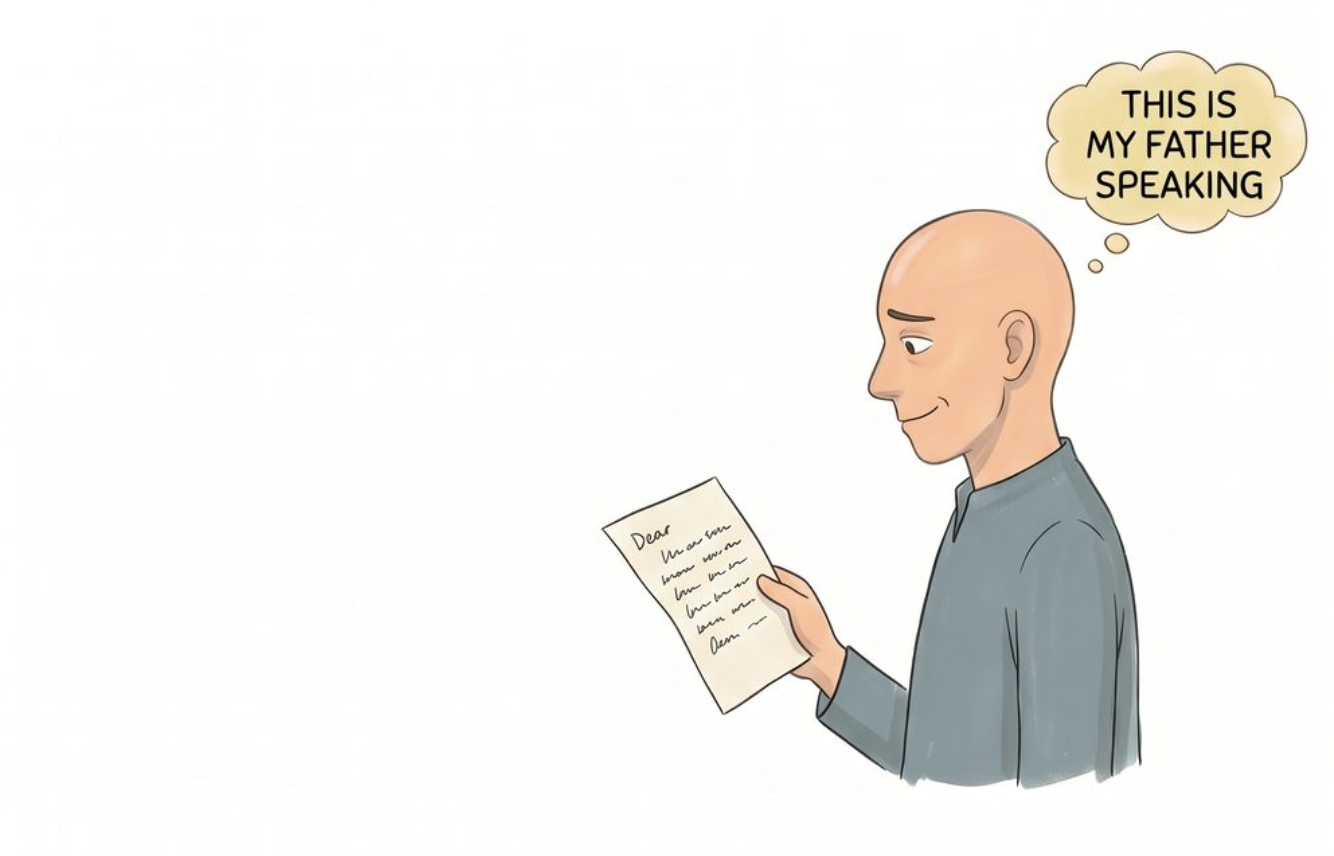
Similarly, when you look at the world, you're seeing the world, but what you're really seeing is God speaking to you. This world is like a letter from God, and in every moment He is speaking to you through His signs:
in situations
in experiences
in nature
and sometimes through people
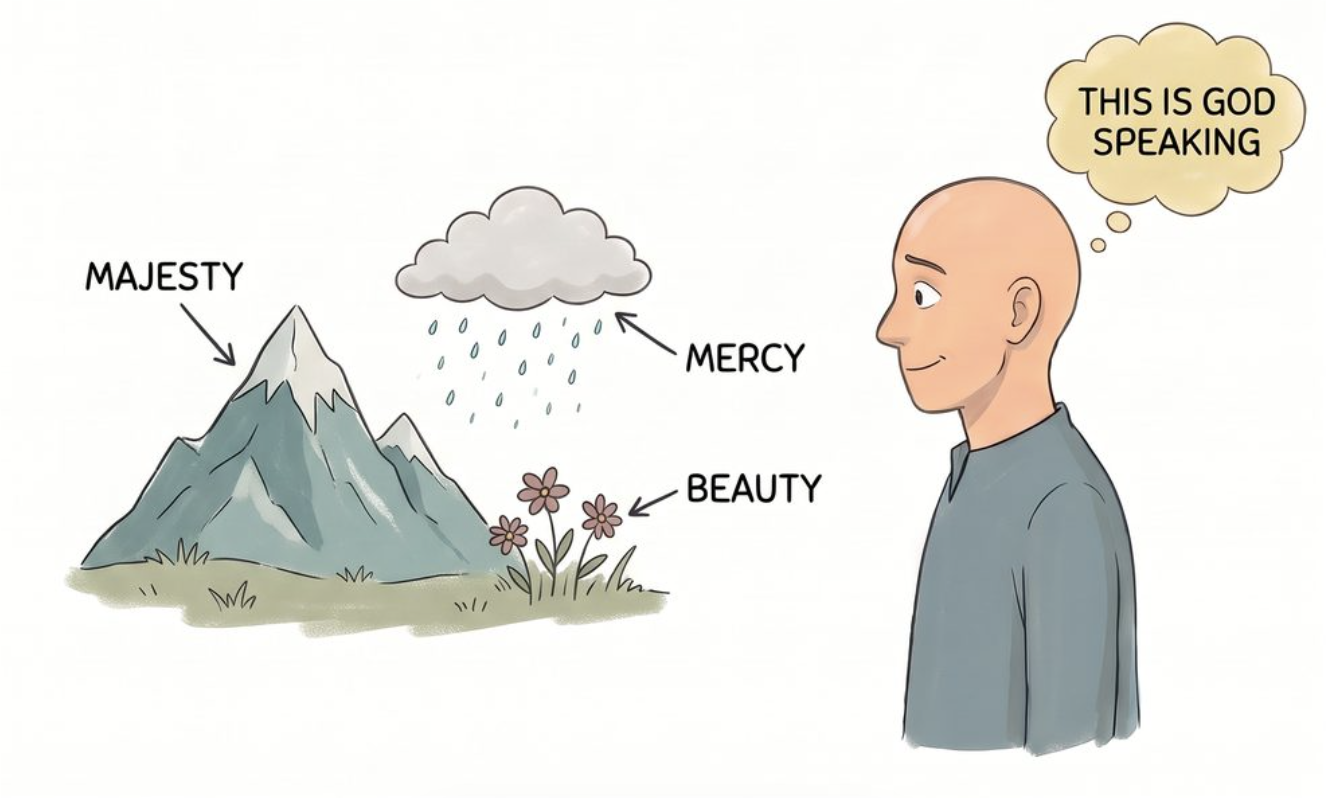
This is what a frame shaped by attention on God lets us see. We still live in the world and take part in it, but we read everything in it as a sign of Him, and so we don't get lost in it.
What this looks like in practice
For me, putting my attention on God means looking at the world as an expression of His qualities. The more I do that, the more it shapes how I see the big questions:
who am I?
what is real?
what's our purpose in life?
where we come from and where we're going.
Those answers become my frame. And when I look at life through that frame, I see things more clearly, and the right thoughts come more easily.
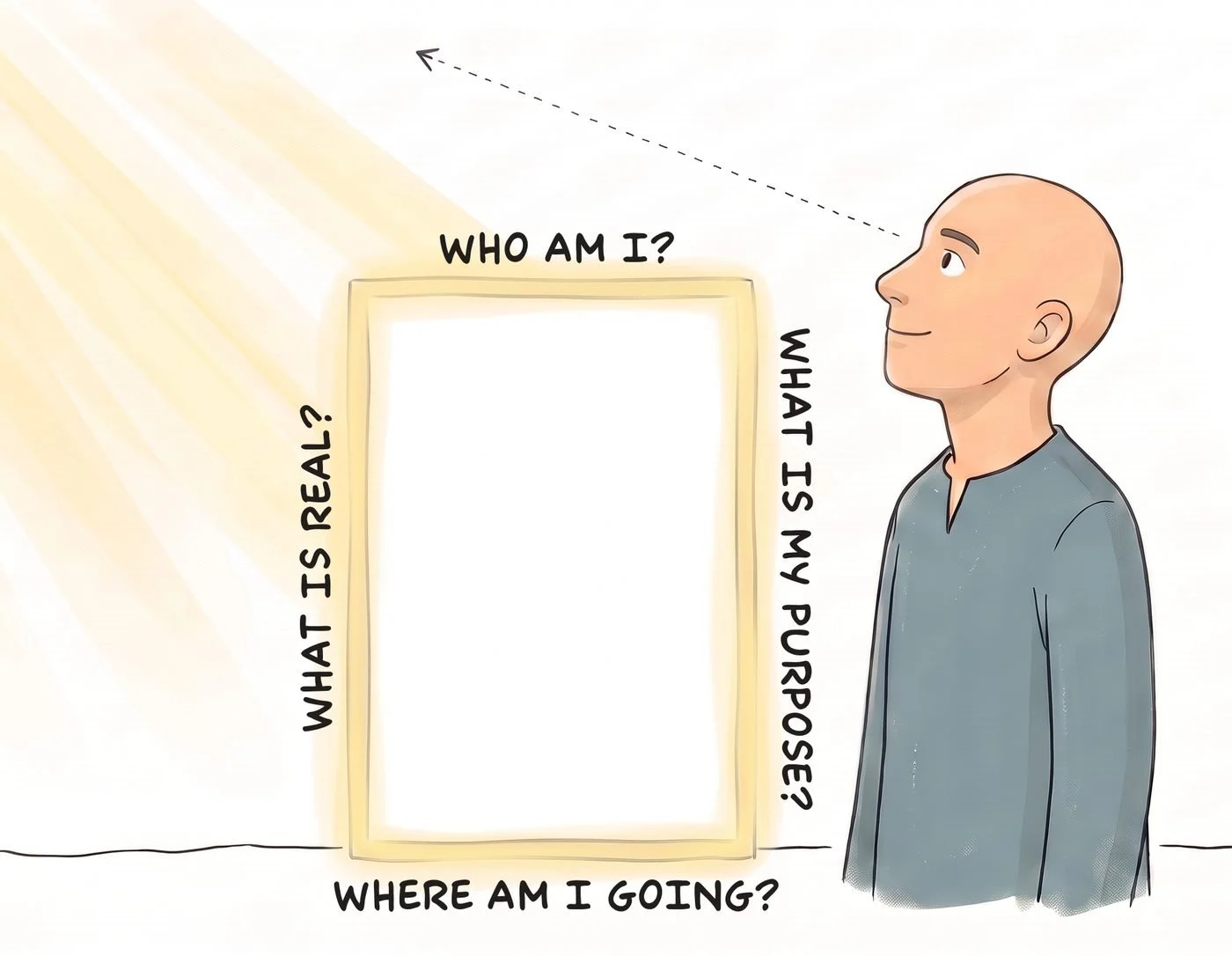
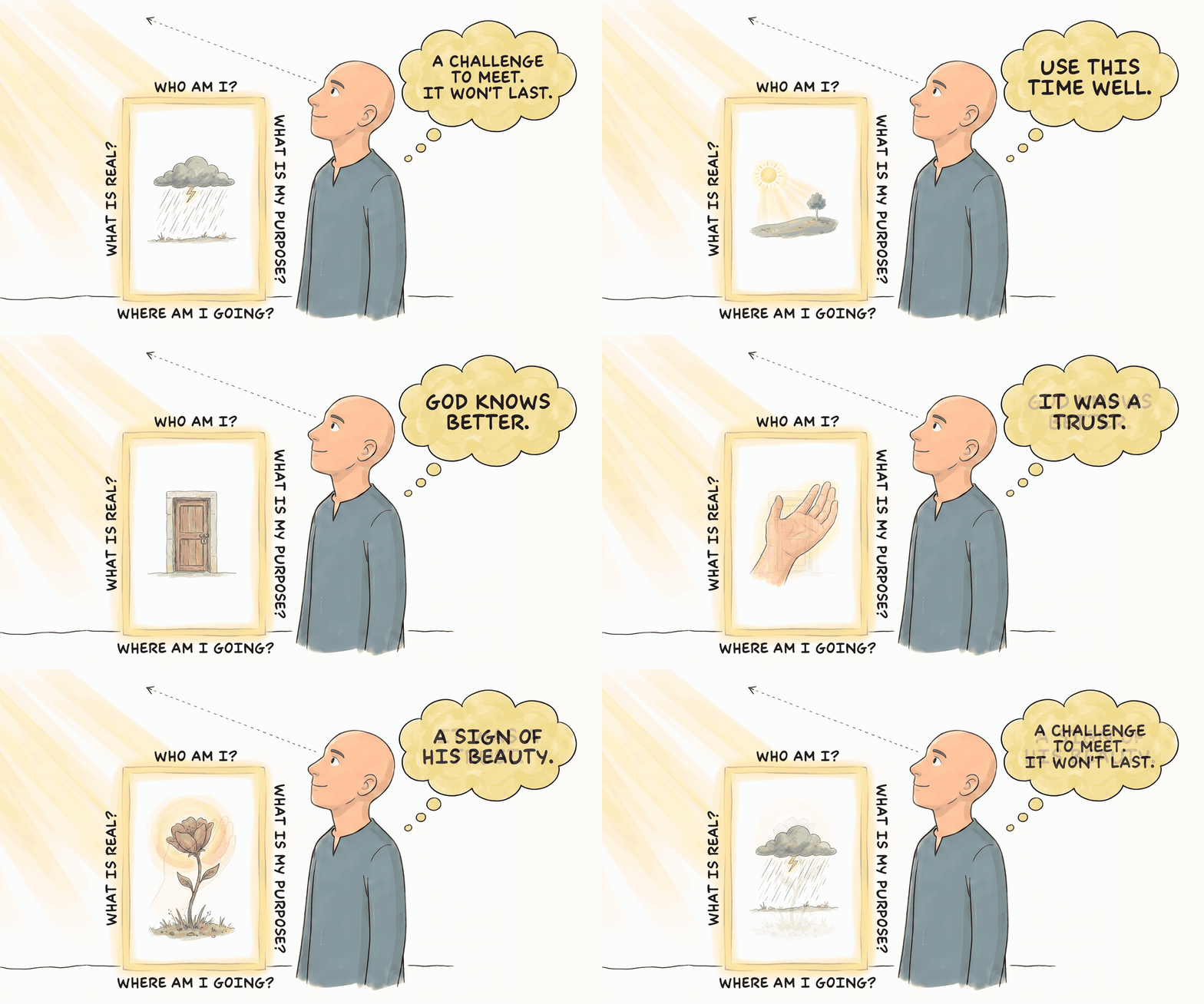
Here's what that frame tells me in different moments:
When I'm going through a tough time: this is a challenge I have to face, and my task is to respond to it as well as I can. There's peace, too, in knowing it won't last.
When things are going really well: this is a good time, so I have an opportunity to make good use of it and take the best actions while I have the chance, because this won't last either.
When things don't go the way I want: I remind myself that God is All-Knowing, and He knows better what is good for me and for others. My role is to try and leave the rest to Him.
When I lose something: it was never fully mine. It was a trust from God.
When I see something beautiful: it's a sign of His beauty.
None of this happens at once. It's a journey.
The world still pulls at my attention, and my attention still wanders. But each time I bring it back and hold God at the center, it settles a little deeper into my frame.
Like the garden, what we keep planting slowly grows, and the frame begins to reflect a more divine worldview.
The more we learn to pay attention this way, the more clearly we'll see.
